
Writing style
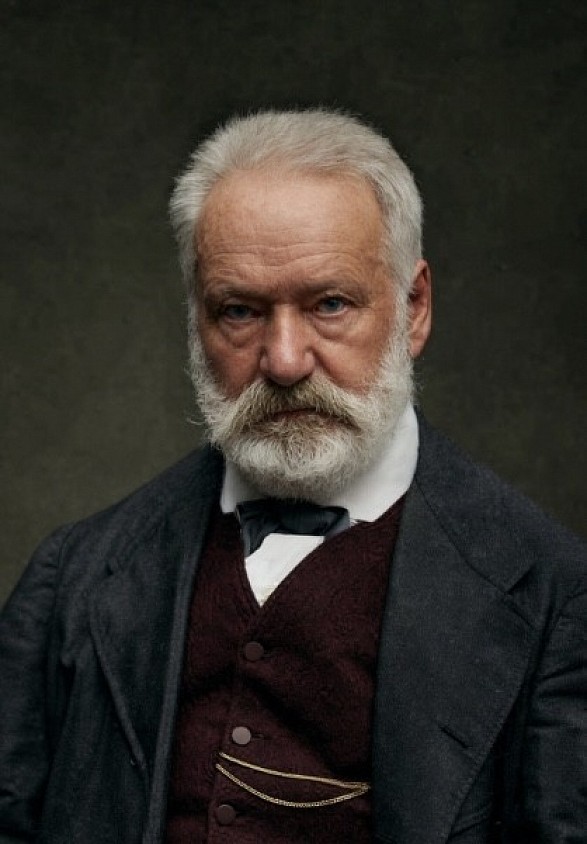
Victor Hugo
Victor Hugo (1802–1885) stands as one of the titans of nineteenth-century French literature, a Romantic whose sprawling novels fused social protest, historical sweep, and moral passion. His major works—Notre-Dame de Paris (1831), Les Misérables (1862), Les Travailleurs de la Mer (1866), and L’Homme qui rit (1869)—are not merely stories but panoramic indictments of injustice, poverty, and tyranny. Yet what animates these books is not plot alone; it is Hugo’s distinctive narrative voice: the omnipresent over-looker.
This over-looker is more than an omniscient narrator. He is a constant, god-like presence who hovers above characters and centuries alike, watching, judging, and digressing. In the opening pages of Les Misérables, he pauses the action to deliver a twenty-page history of the Parisian sewer system; later he steps outside the story to meditate on the Battle of Waterloo, the nature of conscience, or the cosmic meaning of a single act of charity. The same voice lingers in the shadows of Notre-Dame cathedral, describing stone gargoyles as if they, too, are witnesses. Nothing escapes his gaze: the inner thoughts of a convict, the hidden grief of a street urchin, the slow corruption of a society. He is everywhere and always commenting, sometimes tenderly, sometimes thunderously.
Hugo’s prose style—long, rolling sentences, vivid catalogues, sudden rhetorical questions—mirrors this omnipresence. Descriptions stretch for pages, turning Paris streets or the Normandy coast into living characters. Yet the over-looker never disappears into pure scenery; he remains the moral compass, reminding readers that every human life is under eternal scrutiny. Through him, Hugo transforms fiction into prophecy.
This technique makes Hugo’s books feel both intimate and immense. We are never alone with the characters; we are watched with them, and through them we are judged. In the end, the omnipresent over-looker is Hugo himself—exiled, defiant, and certain that literature can redeem the world it so relentlessly observes.