
The Isles before God!
Before colonization
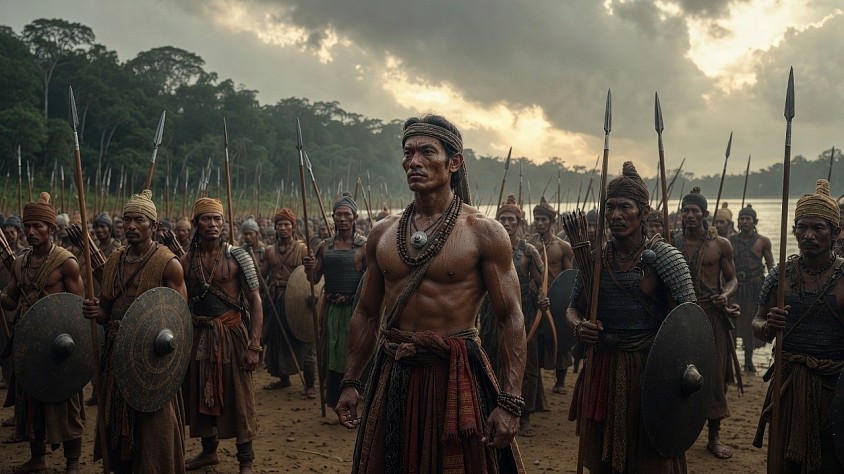
The Isles before God!
The Philippine Isles, now known as the Philippines, were a vibrant archipelago of over 7,000 islands before Spanish colonization in the 16th century. Inhabited for tens of thousands of years, with evidence of human presence dating back to around 67,000 years ago via archaeological finds like the Callao Man, these islands hosted diverse indigenous societies shaped by Austronesian migrations starting around 4,000 BCE. These early settlers brought advanced seafaring skills, agricultural knowledge, and cultural practices that evolved into distinct ethnic groups, including the Tagalogs in Luzon, Visayans in the central islands, and Moros in Mindanao. Pre-colonial life was marked by a harmonious blend of self-sufficiency, communal bonds, and regional interactions, free from the centralized empires seen in nearby Java or Cambodia. Instead, the islands flourished through adaptive, island-specific ways of life, influenced by trade winds and monsoons that connected them to broader Asian networks.
Tribal structures emphasized decentralized governance rooted in kinship and consensus. The fundamental unit was the barangay, a boat-derived term reflecting migratory origins, comprising 30 to 100 families living in coastal or riverine settlements. Led by a datu, whose authority stemmed from personal charisma, wealth accumulated through trade or raids, and proven leadership in conflicts, these communities operated without formal bureaucracy. The datu resolved disputes, organized defenses, and facilitated alliances, often sealed by blood compacts or marriages. Social hierarchy divided into maginoo (nobles), timawa (freemen warriors and landowners), and alipin (dependents, including debt servants and captives). Unlike rigid caste systems, mobility was possible: alipin could gain freedom through service or payment, while timawa might ascend via valor in battle. Women enjoyed notable equality, inheriting property, leading as datus in some cases, and participating in councils. In Mindanao, larger sultanates emerged under Islamic influence, blending barangay traditions with hierarchical rule, but overall, inter-barangay relations involved fluid pacts rather than conquest.
Religion was deeply animistic, viewing the world as alive with spirits called anitos or diwatas residing in nature—trees, rocks, animals, and ancestors. A supreme being, Bathala among Tagalogs, oversaw creation, but worship focused on appeasing local deities through rituals to ensure bountiful harvests, safe voyages, or victory in raids. Babaylans, often female shamans, served as healers, mediums, and priestesses, entering trances with chants, dances, and offerings like pigs or rice wine. Myths, such as the Visayan epic Hinilawod, explained cosmic origins and moral codes. By the 14th century, Islam spread from Borneo to Sulu and Mindanao, establishing sultanates with mosques and Sharia elements, while Hindu-Buddhist influences from trade introduced concepts like karma but never supplanted animism. These beliefs fostered environmental respect, with taboos against overharvesting.
Culturally, pre-colonial Filipinos excelled in oral literature, artistry, and social customs. Epics and folktales were recited during feasts, preserving history without widespread writing, though scripts like baybayin—alphasyllabary on bamboo—recorded poems and pacts. Tattoos (batok) adorned warriors, signifying achievements and spiritual protection. Crafts included gold jewelry, woven abaca fabrics, and pottery traded regionally. Music with kulintang gongs and bamboo instruments accompanied dances depicting hunts or courtships. Villages featured stilt houses of nipa and bamboo, adapted to floods. Gender roles were balanced: women managed homes, traded, and fought, while men hunted and fished. Festivals celebrated life cycles, emphasizing bayanihan—communal cooperation.
Economically, subsistence dominated, with wet-rice farming in terraces like those of the Ifugao, swidden agriculture for upland crops, and fishing using outrigger canoes. Trade boomed from the 10th century, exporting gold, pearls, beeswax, and spices for Chinese porcelain, Indian textiles, and Arab glass. Ports like Manila and Cebu were hubs in the Maritime Silk Road, using gold piloncitos as currency. This prosperity supported artisans and fostered cultural exchanges, laying resilient foundations disrupted by Spanish arrival in 1521.