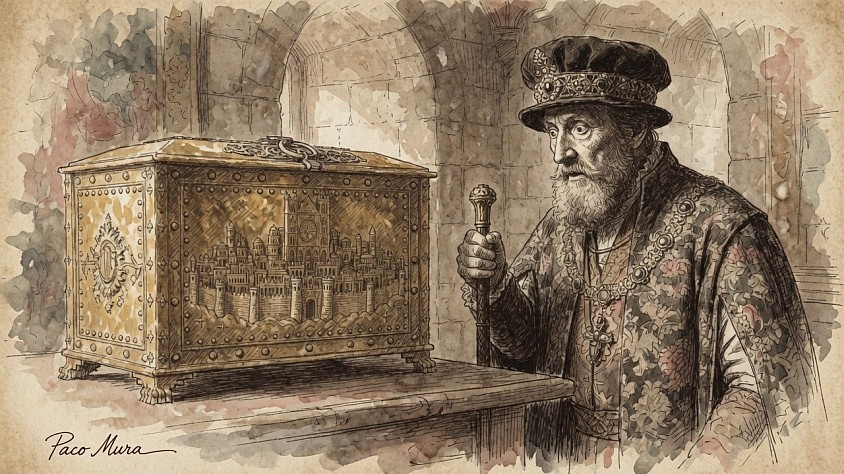
Emperor Charles V
Charles and the World
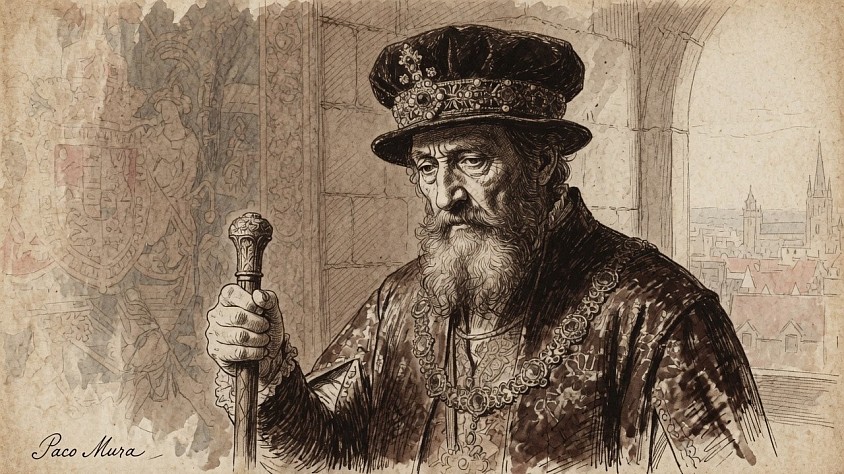
Charles V (1500–1558), Holy Roman Emperor and King of Spain, epitomized the Renaissance monarch as a relentless conqueror, weaving a vast empire that spanned continents and justified the adage “the empire on which the sun never set.” Born in Ghent to Joanna of Castile and Philip the Handsome, he inherited a mosaic of realms through Habsburg marriages—Spain from his maternal grandparents, the Netherlands and Austrian lands from his father—ascending in 1519 to transform dynastic fortune into aggressive expansion. His conquests fused Catholic fervor, feudal rivalry, and economic avarice, reshaping Europe and beyond, while fathering Philip II, who would inherit and amplify this global dominion.
In Europe, Charles’s campaigns were a whirlwind of defense and dominion. He quelled the 1521–1522 revolt of the Comuneros in Spain, securing Castilian loyalty, while battling French King Francis I in Italy, culminating in the 1525 Battle of Pavia, where he captured his rival and claimed Milanese suzerainty. North African ventures, like the 1535 conquest of Tunis, aimed to stem Ottoman advances but yielded fleeting gains against Barbarossa’s corsairs, highlighting the limits of overextension. Domestically, his stewardship of the fractious Holy Roman Empire sparked the Schmalkaldic War (1546–1547) against Protestant princes, exacerbating religious schisms that haunted his weary abdication in 1556. These efforts, though financially ruinous, centralized Habsburg power amid the Reformation’s tempests, setting the stage for his son’s unyielding orthodoxy.
Across the Atlantic, Charles’s conquests ignited the Spanish Golden Age. Hernán Cortés’s 1519–1521 Aztec downfall in Mexico and Francisco Pizarro’s 1532 Inca rout in Peru flooded Seville with silver, fueling Europe’s economy, Charles’s endless wars, and the inflationary tides that reshaped global trade. Yet, it was the Pacific that crowned his exploratory zeal. Sponsoring Ferdinand Magellan’s 1519 fleet, Charles unwittingly backed the first global circumnavigation. Magellan, slain in the Philippines in 1521 amid clashes with locals, unveiled the “peaceful sea,” claiming the archipelago and Spice Islands for Spain. The 1529 Treaty of Zaragoza partitioned the Pacific with Portugal, averting Iberian clash while affirming Spanish maritime reach. Expeditions like the 1525 Loaísa voyage blended evangelism and commerce, as survivor Antonio Pigafetta’s vivid chronicles attest, seeding Manila’s galleon trade and the Manila-Acapulco link that would define colonial Asia.
Charles’s Pacific odyssey transcended mere territory; it globalized conquest, linking Manila’s silks to Acapulco’s silver in a web of faith and fortune. His legacy—a fractured yet foundational empire—passed to Philip II, whose Armada dreams and inquisitorial grip would both extend and strain the Habsburg behemoth. Echoing in modern globalization’s roots, Charles’s ambitions remind us how one ruler’s sails forever altered humanity’s horizon.