
Book 1: Departure
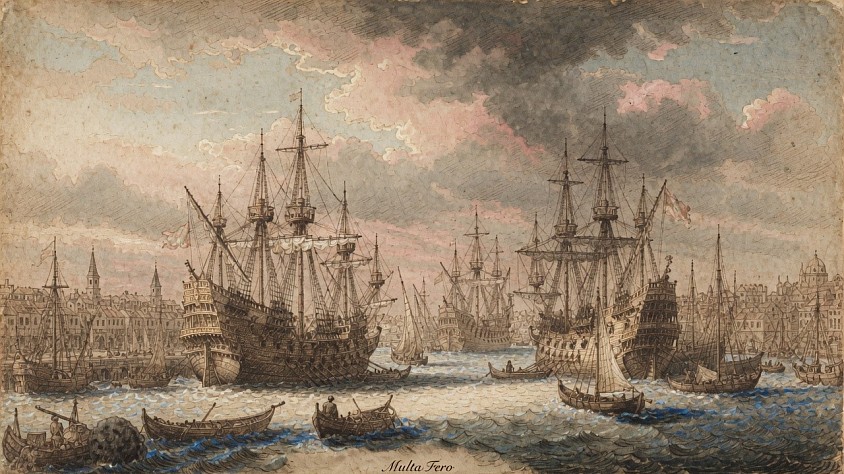
The Port of Barra de Navidad, Mexico in 1564
Isles of God
In the vast and sombre theatre of the ages, where the Eternal Hand traces upon the unfathomable map of the seas the colossal destinies of empires and the secret dramas of souls, there appears, like a flash of lightning across the storm-clouds of History, a sublime and terrible spectacle.
It was in that fateful September of the year of grace 1513 that Vasco Núñez de Balboa, that son of Extremadura born of iron and hunger, a man half bandit and half demigod, rent asunder the pestilential bosom of the Isthmus of Panama. At the head of a handful of companions as fierce as himself, he emerged from the green hell of the jungle—tattered, bloodied, yet transfigured—upon the shore of an unknown ocean. He strode into the foaming waves, sword raised like a challenge hurled at the very face of Infinity, and in a voice that seemed to awaken the echoes of Creation itself, he claimed for the Crown of Castile that immense, mysterious Mar del Sur, with all its veiled continents, its sleeping islands, and its unborn glories.
Before his devouring gaze stretched not merely waters, but the very heart of the world laid bare. He beheld rivers of gold, oceans of pearls, empires yet to crumble like dust beneath the heel of destiny. It was a discovery raw, violent, and magnificent—a Promethean cry torn from the breast of humanity, a conquest achieved by the sheer fury of will and the cold kiss of Toledo steel. The planet itself seemed to tremble at this audacious unveiling. Yet it remained but a vision! The giant ocean lay unveiled, yet unconquered. Balboa turned his back upon that azure immensity and returned to the fever-haunted shores of the Caribbean, his soul still athirst, his dream unfulfilled. The Pacific had been revealed to Man—but Spain had not yet crossed its sacred threshold.
Half a century had rolled by, as if History herself—that august and eternal matron, veiled in the mists of ages and crowned with the ruins of fallen empires—had paused upon the threshold of her temple. There she drew a deep and solemn breath from the very lungs of Time, a silence vast and pregnant with destiny. In that hush the echoes of forgotten conquests slumbered, while the winds of the sea whispered prophecies to the listening stars.
Then, upon those same majestic shores—bathed in the golden light of the Pacific and guarded by the eternal ramparts of cloud-wreathed volcanoes—there arose another figure, colossal against the horizon of fate: Miguel López de Legazpi, the iron-willed Basque. Stern as the judgment of Heaven, unyielding as the granite ramparts of his native Pyrenees—those ancient giants that lift their snow-crowned brows to the thunder and defy the tempests of centuries—he stood, a living embodiment of the indomitable will of Spain, forged in the mountains and tempered in the fires of unquenchable ambition.
In his gaze burned the cold flame of resolution; in his breast beat the heart of a conqueror who knew neither doubt nor mercy, only the inexorable march of Providence.
He came not as a discoverer trembling before the unknown, but as its predestined master. In 1564, from the ports of New Spain, he launched his frail fleet of galleons across the void, accompanied by the sons of Saint Augustine—those humble soldiers of the Cross. What Balboa had glimpsed in rapturous frenzy, Legazpi seized with the calm, inexorable force of a founder and a lawgiver. He crossed the enormous breast of the Pacific and planted, upon its farthest rim, not a fleeting banner, but the enduring standard of Spain and of Faith.
Where Balboa had claimed the waters with a flashing sword, Legazpi claimed the islands with law, with settlement, with the living fire of evangelization. His expedition was no mere raid of rapine and plunder, but a pilgrimage ordained, as the devout chroniclers believed, by Heaven itself. In the emerald Islas del Poniente, Spain beheld a new and sacred beginning: the “Isles of God,” a virgin field offered to the eternal harvest of souls, untouched by the bloody tempests then rending Europe asunder.
Thus do these two titans stand immortal in the majestic procession of Spain’s oceanic epic.
Balboa, the daring scout, the Promethean herald, flung open the colossal doors of the Pacific with a cry that shook the world. Legazpi, the steadfast founder, the architect of empires and cathedrals of the soul, strode through those same doors and there raised, upon the distant edge of the earth, a house that would endure—a house of faith, of justice, and of undying glory.
One revealed the ocean. The other wedded it to destiny.
This sublime vision found profound echo in the soul of King Philip II, that monarch consumed by fervent religious conviction and by the profound anxiety for his own eternal salvation. Moved by the impassioned warnings of Bartolomé de las Casas, that Dominican friar who thundered like an ancient prophet against the brutal exploitation of indigenous souls, Philip trembled lest Spain, in mistreating these children still dwelling in spiritual darkness, should draw down upon herself the judgment of Heaven. He saw in colonization not mere conquest, but a sacred duty: gentle pacification, systematic evangelization, protection of the weak. In truth, the Philippines became the Isles of God—a fresh theater where Saint Augustine’s City of God could rise through merciful instruction and the patient gathering of souls.
In this fateful stroke, vaulting ambition and burning faith sailed together across the boundless Pacific, renewing upon its waters humanity’s primal and eternal drama.
There, in Legazpi’s frail fleet, Saint Augustine’s immortal antithesis found living flesh. The City of Man raised its towers of pride and avarice: clinking coins, thundering cannon, whispered treacheries, and the blood of the vanquished. It loved itself to the contempt of God. Yet within the same vessels pulsed the invisible City of God—humble, eternal, built of living stones: contrite hearts, obedient wills, and love turned toward the Creator. Its victories were not measured in leagues conquered, but in souls turned toward the redeeming Cross.
Ambition stood at the helm; Faith scanned the heavens from the crow’s nest. Greed muttered in the darkened holds; prayer rose with the creaking of the timbers. These twin cities clashed and embraced, driving the fleet through storm and calm, through sin like jungle miasma and expiation like the first breath of dawn.
For History unfolds not in neat divisions, but in titanic wrestling within empires and within the depths of the human soul. Every voyage across the deep is a chapter in humanity’s immense destiny—toward divine mercy, toward justice, toward that final hour when the trumpet shall sound and the two cities shall stand revealed, born of the same clay yet separated for eternity.
Thus endures the legacy of Legazpi. The Isles of God shine not merely as earthly conquests, but as altars where eternal light meets mortal striving, where the infinite drama of Man and his Creator continues beneath the tropical sun.
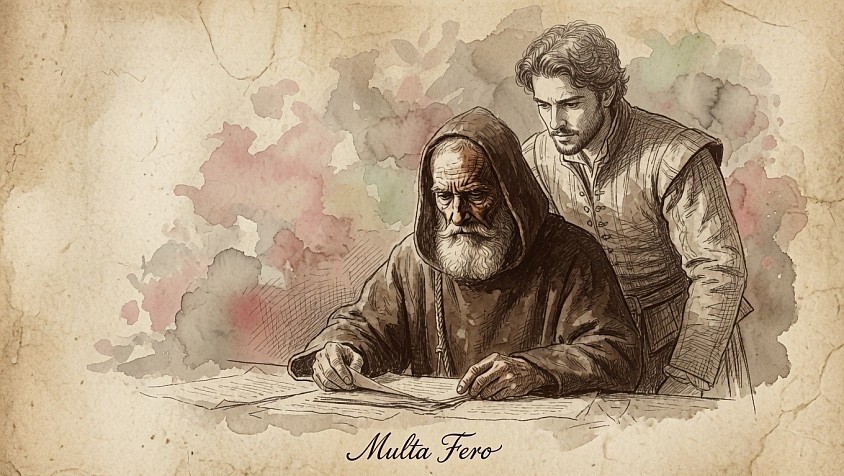
Fray Felipe de la Vega & Ricardo Murcia
Chapter 1: November 1572
In the humid twilight of Manila, November 1572, mere months after the death of Miguel López de Legazpi, the Eternal Observer—timeless witness to the rise and fall of empires—unfolds the fragile birth of Spanish dominion in the Philippine Isles. Within the young walls of Intramuros, Fray Felipe de la Vega, an Augustinian shaped by Urdaneta’s sacred charge to transform these into the “Isles of God,” wrestles with the eternal tension between Cross and Sword.
A bundle of documents from the Casa de Contratación stirs old wounds: the bitter San Lucas affair, rival claims between Arellano’s daring pinnace and Urdaneta’s celestial-guided return, and calls to restore Admiral Carrión. As Fray Felipe pores over these parchments with his scribe Ricardo, memories of blood compacts, storms, and fractured loyalties surface, exposing envy’s serpent in the garden of conquest. His treatise on indigenous education lies half-finished, overshadowed by doubts: Can the Cross truly redeem what the Sword has scarred?
Meanwhile, Maria Lin—“Indigo”—a woman of Chinese and native blood who served as Legazpi’s housekeeper, moves through the shadowed streets of the Parian and Intramuros. Suspecting foul play in the Governor’s sudden death, she carries a heavy secret. In confession to Fray Felipe, she reveals her entanglement with hidden arts and the indigo-stained resistance tied to the violent reclamation of the Divine Child’s reliquary from the babaylan Bayoguin in Panay—events whose echoes now haunt the colony.
Unopened letters from the San Lucas Codex surface in the convent, unveiling Legazpi’s inner torments, the reliquary’s profane transformation in native hands, and Bayoguin’s dying curse. As monsoon rains gather, Fray Felipe confronts the grotesque marriage of faith and empire, mercy and violence, providence and human frailty. In this quiet interstice of history, a single parchment and a silk-wrapped mystery become seeds of future tempests—whispers of betrayal, redemption, and the unending struggle between the City of God and the City of Man.
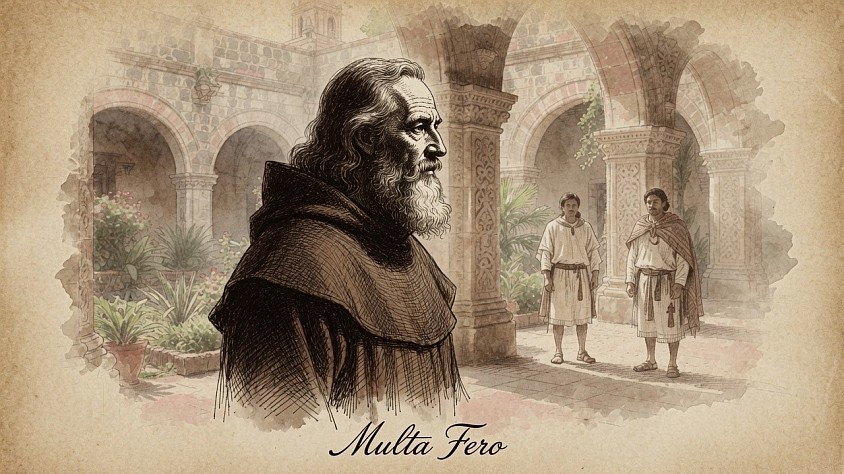
Fray Andrès de Urdaneta
Chapter 2: Prelude
In the grand theater of Time, the Eternal Observer turns His gaze upon Andrés de Urdaneta, a towering Renaissance figure born around 1498 in the rugged Basque hills of Villafranca de Ordizia. Forged amid the Pyrenees’ winds and Atlantic brine, this polymath—navigator, warrior, scholar, and eventual Augustinian friar—embodies the era’s sublime contradictions: medieval piety fused with insatiable curiosity, chivalric oaths tested against the grotesque machinery of empire and ambition.
The narrative traces Urdaneta’s odyssey: orphaned young, he masters Latin and arms before plunging into the Italian Wars, where he witnesses the bloody futility of kings’ quarrels beneath indifferent stars. Joining the ill-fated Loaísa Expedition (1525), he endures tempests, scurvy, shipwrecks, and Portuguese rivalry in the Moluccas. Scarred by battle, imprisonment, and betrayal—yet enriched by encounters with Chamorro culture via survivor Gonzalo de Vigo and mastery of Pacific winds, currents, and languages—he becomes one of the first to circumnavigate the globe after Elcano. Returning to Spain, then New Spain, he renounces worldly glory in 1552, entering the Augustinian priory in La Ciudad de Mexico at roughly age fifty-four. There, amid the collision of Aztec ruins and rising cathedrals, he grapples with the City of Man versus the City of God, tempering conquest’s violence with contemplative faith.
Summoned by Philip II and Viceroy Velasco around 1560, the aging mariner-friar agrees to serve as chief pilot and spiritual guide for the Legazpi expedition—not as commander, but as the indispensable mind who will discover the tornaviaje, the return route across the Pacific via the Kuroshio Current and westerlies. Preparations in La Ciudad de Mexico’s Augustinian convent unfold with moral urgency: elections of missionaries like Fray Martín de Rada, emphasis on language study, schools, and merciful evangelization inspired by Bartolomé de las Casas. A key memorandum by Fray Diego de Herrera grapples with the Holy Child reliquary gifted by Magellan to Rajah Humabon in Cebu (1521), weighing its sacred symbolism against shadows of political alliance, urging gentle conversion over coercion.
Through vivid, sensory-rich scenes of candlelit cells, storm-lashed decks, bloodied battlefields, and bustling colonial plazas, the chapter portrays Urdaneta as a tragic hero whose scars and wisdom bridge oceans, empires, and souls—charting not only the Pacific but the deeper straits between ambition and providence. As the fleet prepares to sail in 1564, the Eternal Observer beholds humanity’s eternal drama: frail vessels upon infinite seas, striving toward redemption amid tempests of doubt and glory.
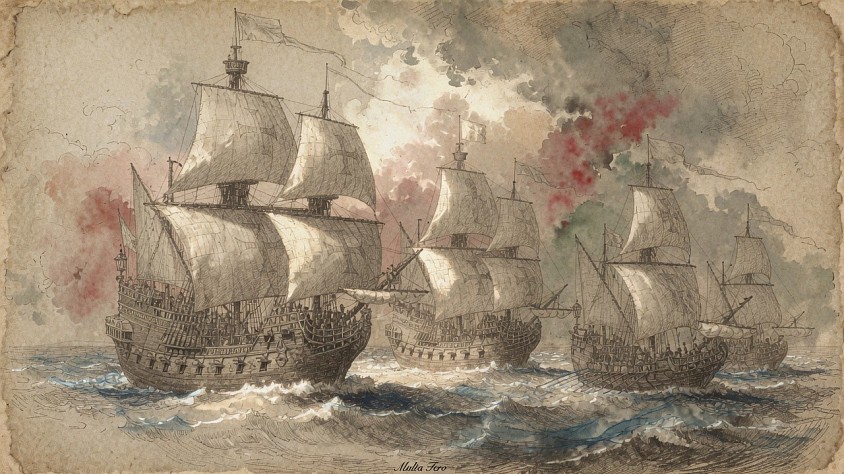
Departure of the Fleet
Chapter 3: Departure
In 1563–1564, amid the sweltering crucible of La Ciudad de México and the chaotic shipyards of Barra de Navidad, the Eternal Observer chronicles the appointment and departure of Miguel López de Legazpi as governor and captain-general of the royal expedition to the Western Isles. A steadfast Basque administrator nearing sixty, Legazpi—kinsman to the visionary navigator Fray Andrés de Urdaneta—embodies prudent command amid clashing visions: Urdaneta’s cautious, soul-focused route via Guam and New Guinea versus Admiral Juan Pablo de Carrión’s bolder push for the fertile Philippines.
Preparations pulse with grandeur and grotesque frailty. Hulls rise under relentless hammers; provisions rot in barrels (a scandal shadowing Legazpi’s son Melchor); soldiers drill, friars pray, and grandsons Felipe and Juan de Salcedo shine with youthful promise. Secret councils in the Audiencia weigh souls against survival, mercy against empire, as sealed instructions balance discovery of the tornaviaje, rescue of lost survivors from prior expeditions, and establishment of a colony.
On November 21, 1564, five ships bearing some five hundred souls—soldiers, sailors, and Augustinian friars—slip westward into the Pacific. Legazpi’s address rings across the decks, invoking Augustine’s two cities: the transient City of Man built on ambition and the eternal City of God rooted in faith. Urdaneta charts by stars and conscience, tempering doubt with prayer. Family tensions, supply betrayals, and whispered intrigues shadow the fleet, yet resolve holds as the coast fades.
Through Victor Hugo-esque contrasts of light and shadow, sweat and incense, paternal sacrifice and imperial dream, the chapter meditates on humanity’s eternal voyage: frailty redeemed by grace, ambition transfigured by humility. Legazpi’s steady hand and Urdaneta’s scarred wisdom launch the enterprise that will found Cebu, birth the Manila Galleon trade, and bind hemispheres in silver, silk, and Cross—proving that even rotten barrels and human contradictions serve Providence’s vast design.
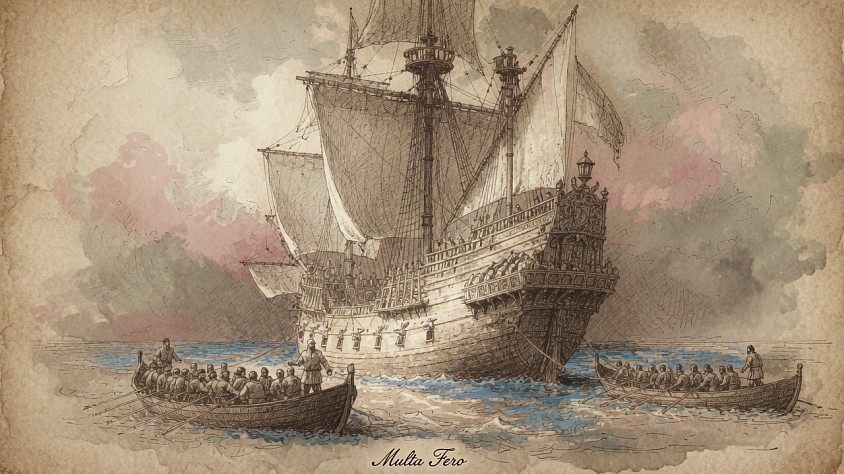
The San Pedro in a Bay of the Island Los Barbudos
Chapter 4: Pacific
In late November 1564, mere days after departing Barra de Navidad, the fragile Spanish fleet sails westward across the Pacific under Miguel López de Legazpi. The Eternal Observer unveils the drama unfolding upon the heaving decks of the San Pedro: sealed orders from the Audiencia of México abruptly redirect the expedition from the pure, unevangelized shores of Guam to the already-touched Philippine Isles, a compromise born of politics, scarcity, and the influence of ambitious Admiral Juan Pablo de Carrión.
Urdaneta, the scarred Augustinian pilot whose soul burns for untainted evangelization, receives the news with prophetic anguish. His dream of planting the Cross in virgin soil shatters against royal pragmatism; yet holy obedience binds him. He guides the fleet onward, his inner crucifixion between faith and necessity deepening with every league. Legazpi, the steadfast Basque adelantado, hardens after the San Lucas deserts under Arellano—kin turned traitor—transforming from prudent administrator into iron-willed commander. Betrayal and dwindling supplies forge a colder resolve: mercy yields to necessity, the City of Man asserts dominion over the City of God.
By early January 1565, they reach the Isle of the Bearded Ones. Initial wonder blooms as noble, bearded natives extend hospitality with open hands and coconut milk. Crosses rise; baptisms begin. Yet hunger and ambition soon twist the encounter into tragedy. Spanish foraging turns to pillage, floggings, and violence. Urdaneta and his brethren protest in vain, their voices drowned by the lash and the inexorable logic of empire. Legazpi enforces order with growing tyranny, prioritizing provisions and possession over purity of mission.
Through tempests of sea and soul, the chapter meditates on humanity’s eternal contradictions: sublime faith against grotesque ambition, the luminous Cross shadowed by the Sword, idealism crucified upon the necessities of survival. The fleet presses on, carrying both light and chains toward the Philippines, while the Pacific whispers of lost dreams and empires forged in blood and compromise.