Santo Niño de Cebu
Santo Niño de Cebu
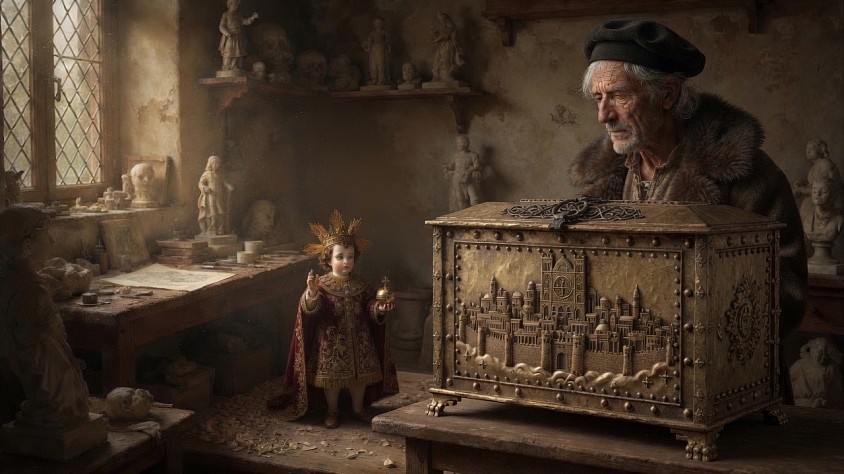
The Santo Niño de Cebu, also known as the Señor Santo Niño, is a revered statue of the Child Jesus that stands as the oldest Christian artifact in the Philippines, symbolizing the dawn of Christianity in the archipelago. This small wooden image, no taller than a forearm, depicts the infant Jesus adorned in royal vestments—a pristine white tunic evoking the purity of resurrection and a vibrant crimson cape that shimmers under candlelight, suggesting divine kingship. The statue’s cherubic face, with its wide eyes and gentle smile, seems to gaze warmly at devotees, drawing them into a sense of intimate protection amid the humid tropical air of Cebu.
The story of the Santo Niño begins in 1521 with the arrival of Portuguese explorer Ferdinand Magellan on Cebu Island. As waves crashed against the sandy shores and the salty sea breeze carried the scent of distant spices, Magellan introduced Christianity to the local rulers, baptizing Rajah Humabon (renamed Carlos) and his chief consort, Hara Humamay (baptized Juana), along with hundreds of their subjects. To commemorate the event, Magellan gifted the statue—believed to have been crafted by Flemish artisans, its smooth wood polished to a soft sheen and inspired by a vision of St. Teresa of Ávila—to Queen Juana. This act marked the first recorded Christian baptism in the Philippines, the faint echo of chants and the cool splash of holy water planting the seeds of a faith that would endure through centuries of colonial rule.
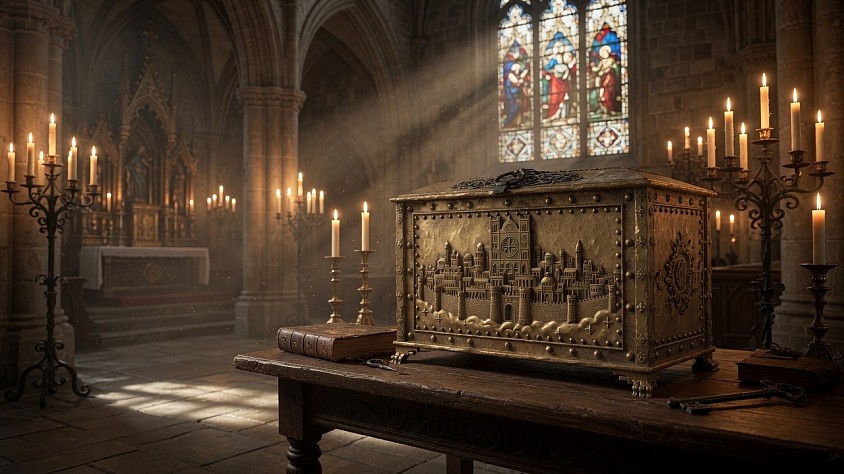
Tragedy struck when Magellan’s forces clashed with local chieftain Lapu-Lapu, the clash of steel and shouts piercing the dense jungle air, leading to the explorer’s death and the expedition’s retreat. The statue was left behind, and Cebu reverted to its pre-colonial ways. However, in 1565, Spanish conquistador Miguel López de Legazpi returned to colonize the islands. Upon landing, his troops burned the village to subdue resistance, filling the air with acrid smoke and the crackle of flames. Amid the ruins, sailor Juan Camus discovered the Santo Niño unharmed in a wooden box, its surface unscathed and radiating a faint, ethereal glow. This rediscovery was hailed as a miracle by both Spaniards and natives, reigniting evangelization efforts and leading to the construction of the first Christian church on the site—the Basilica Minore del Santo Niño, established by Augustinian friar Andrés de Urdaneta, where the aroma of incense and beeswax candles now mingles with the murmur of prayers. The basilica, now a national cultural treasure, houses the canonically crowned image and serves as the epicenter of devotion.
Beyond its historical roots, the Santo Niño embodies profound cultural and spiritual significance for Filipinos. It represents divine protection, resilience, and childlike faith, often invoked for blessings in times of hardship, with devotees feeling the statue’s comforting presence like a gentle hand on their shoulder. The annual Sinulog Festival, held on the third Sunday of January, attracts up to five million devotees for processions, dances, and prayers, transforming Cebu into a vibrant tapestry of rhythmic drumbeats, the sweet tang of street food like lechon roasting over coals, and resounding “Pit Señor!” chants—meaning “Hail, Lord!”—that vibrate through the crowded streets. This feast commemorates the 500th anniversary of Christianity in the Philippines in 2021, highlighting its role in national identity.
Today, devotion to the Santo Niño extends globally through the Filipino diaspora, with replicas enshrined in homes and churches worldwide, their polished surfaces touched reverently during family prayers. It transcends mere relic status, fostering a living faith that unites communities in hope and celebration. As a symbol of the Philippines’ Christian heritage, the Santo Niño de Cebu continues to inspire awe, reminding believers of the miraculous intersection of history and divinity, enveloped in the sensory embrace of tradition. (Word count: 358)
The reliquary